Vessel strikes with cetaceans
A vessel strike is a collision between a ship and a large marine animal. It is one of the leading known causes of death for large cetaceans — and one of the hardest to measure.
The scale of the problem
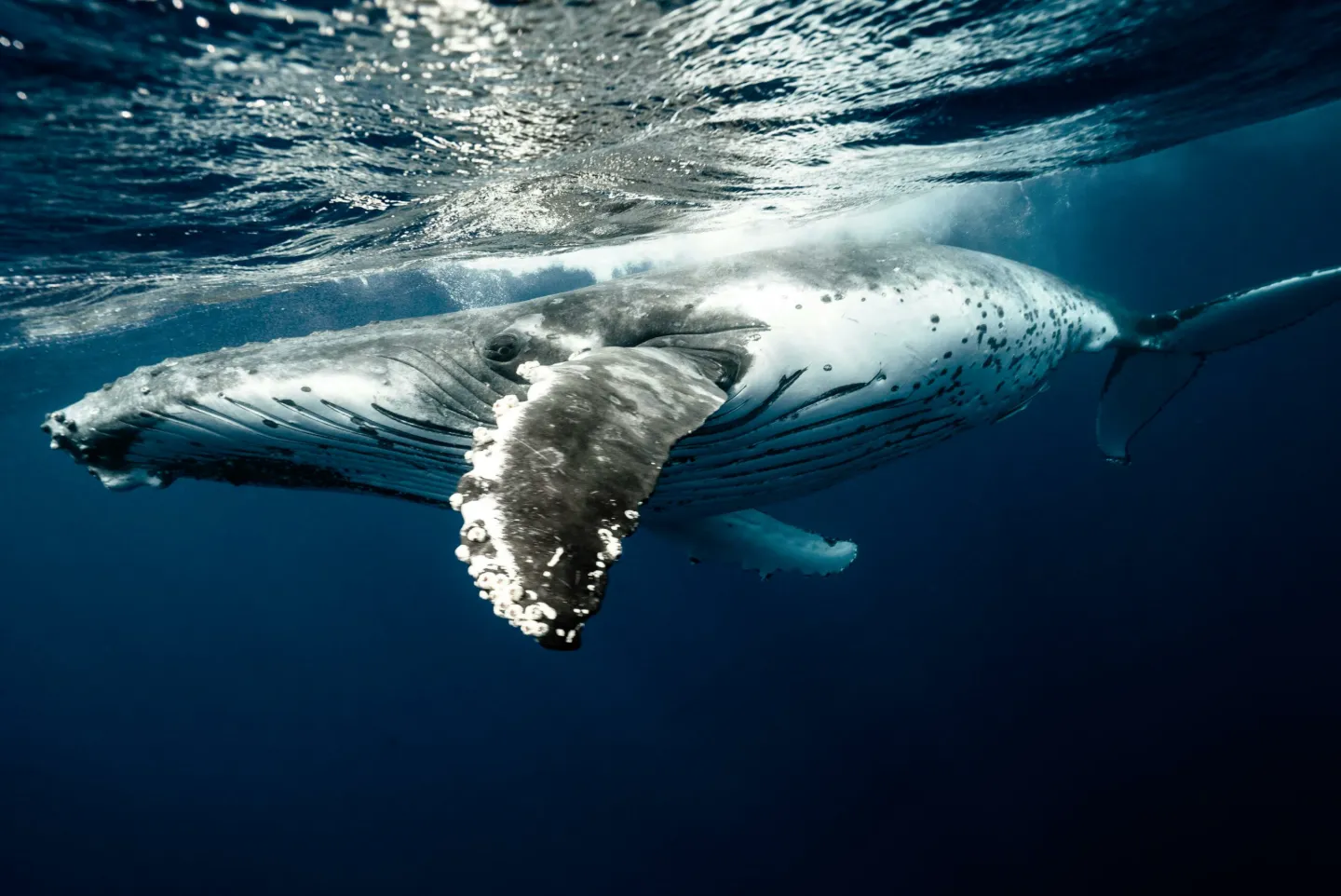
At least 75 marine species are affected by vessel collisions: cetaceans, but also sea turtles, sirenians, pinnipeds, sharks — including whale sharks — and fish such as the ocean sunfish (Schoeman et al., 2020). For large cetaceans, collisions are one of the leading causes of death.
Their number has risen steadily in recent decades: there are more ships, and they are larger and faster. The issue has been a key concern for many years, yet it still faces a shocking lack of data to assess the overall impact of collisions on species (Winkler et al., 2020).
Why collisions are so hard to count
Estimating the number of collisions, and therefore their real impact on populations, is difficult for several reasons (Ritter and Panigada, 2019). The animals involved are rare, often far from the coast, and their distribution shifts over time.
Collisions themselves are under-reported, when they are reported at all (Pirotta et al., 2019): most are simply invisible. A large ship does not feel the impact; at night or in poor sea conditions, no one sees it.
After a collision, the animal usually sinks, is consumed by scavengers, or drifts offshore and is never found. It is sometimes carried into port on the bulbous bow, but such cases are rare. A small proportion drifts ashore: if the animal strands fresh, the collision can sometimes be identified as the cause of death — more often, the state of the carcass no longer allows any conclusion (Peltier et al., 2019).
This is precisely what our approach responds to: since collisions cannot be counted, we estimate the probability that they occur.
Consequences for the animals
Collisions are not always fatal. Lethality depends mainly on the size and speed of the vessel: a study in U.S. waters shows that reducing speed lowers the likelihood of a fatal outcome for all vessel sizes, but the effect is strongest below 108 metres — above that, the strike remains highly lethal at any speed (Garrison et al., 2025).
A distinction is made between direct consequences — the immediate effects of the collision —, long-term consequences, with a decline in the animal’s physical condition over time, and consequences for populations. Animals may suffer injuries that prove fatal at the moment of impact or several days, weeks or months later.
The vessels involved
All types of vessel are involved, whether motorised or under sail. Those most frequently involved in collisions with cetaceans are ferries, sailing boats, passenger ships, motor yachts, whale-watching boats, naval vessels, container ships and cargo ships (Schoeman et al., 2020). Damage to the vessels themselves can be significant and sometimes irreversible.
Why ocean racing?
Ocean racing combines several risk factors: peak speeds above thirty knots on foiling boats, continuous sailing by day and by night, a small crew — sometimes a single sailor — who cannot keep a permanent lookout, and routes crossing offshore areas that are lightly travelled and therefore poorly documented.
This is why Share The Ocean uses it as a demonstrator: the risk is concentrated, it can be modelled, and race organisers hold a direct lever — the course itself.
What is being done
At present, routing measures and speed reduction appear to be the most effective ways of reducing the number and severity of collisions. The effectiveness of technological devices based on infrared or acoustic deterrents has not yet been demonstrated: it depends on the species, the geographical area, and the willingness and ability of users to apply the measures. These methods remain complementary and will ultimately help reduce the impact of collisions on marine megafauna.
Internationally, the International Whaling Commission maintains a global vessel strike database and established in 2023 an Expert Panel on Vessel Strikes, of which Auriane Virgili is a member.
References
Garrison, L. P., Lisi, N. E., Gahm, M., Patterson, E. M., Blondin, H. and Good, C. P. (2025). The effects of vessel speed and size on the lethality of strikes of large whales in U.S. waters. Frontiers in Marine Science, 11, 1467387. doi.org/10.3389/fmars.2024.1467387
Peltier, H., Beaufils, A., Cesarini, C., Dabin, W., Dars, C., Demaret, F., Dhermain, F., Dorémus, G., Labach, H., Van Canneyt, O. and Spitz, J. (2019). Monitoring of marine mammal strandings along French coasts reveals the importance of ship strikes on large cetaceans: a challenge for the European Marine Strategy Framework Directive. Frontiers in Marine Science, 6, 486. doi.org/10.3389/fmars.2019.00486
Pirotta, V., Grech, A., Jonsen, I. D., Laurance, W. F. and Harcourt, R. G. (2019). Consequences of global shipping traffic for marine giants. Frontiers in Ecology and the Environment, 17(1), 39–47. doi.org/10.1002/fee.1987
Ritter, F. and Panigada, S. (2019). Collisions of vessels with cetaceans — the underestimated threat. Elsevier, 531–547. doi.org/10.1016/B978-0-12-805052-1.00026-7
Schoeman, R. P., Patterson-Abrolat, C. and Plön, S. (2020). A global review of vessel collisions with marine animals. Frontiers in Marine Science, 7, 292. doi.org/10.3389/fmars.2020.00292
Winkler, C. et al. (2020). Global numbers of ship strikes: an assessment of collisions between vessels and cetaceans using available data in the IWC Ship Strike Database. Report IWC/68B/SC HIM09, Scientific Committee of the International Whaling Commission.